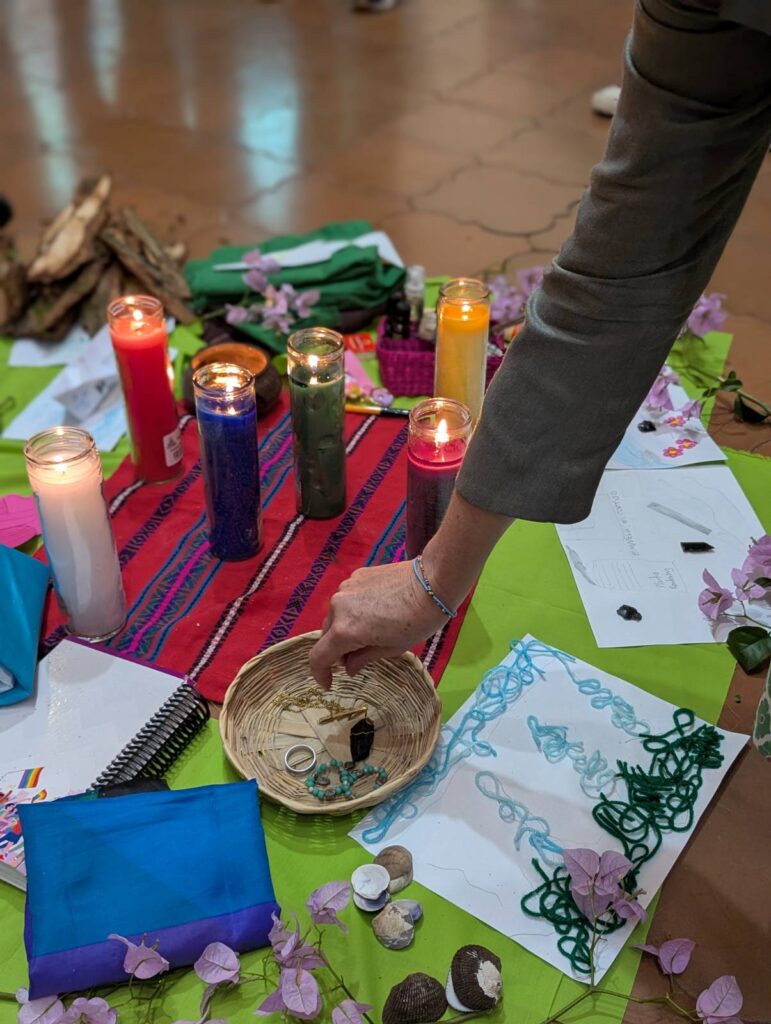
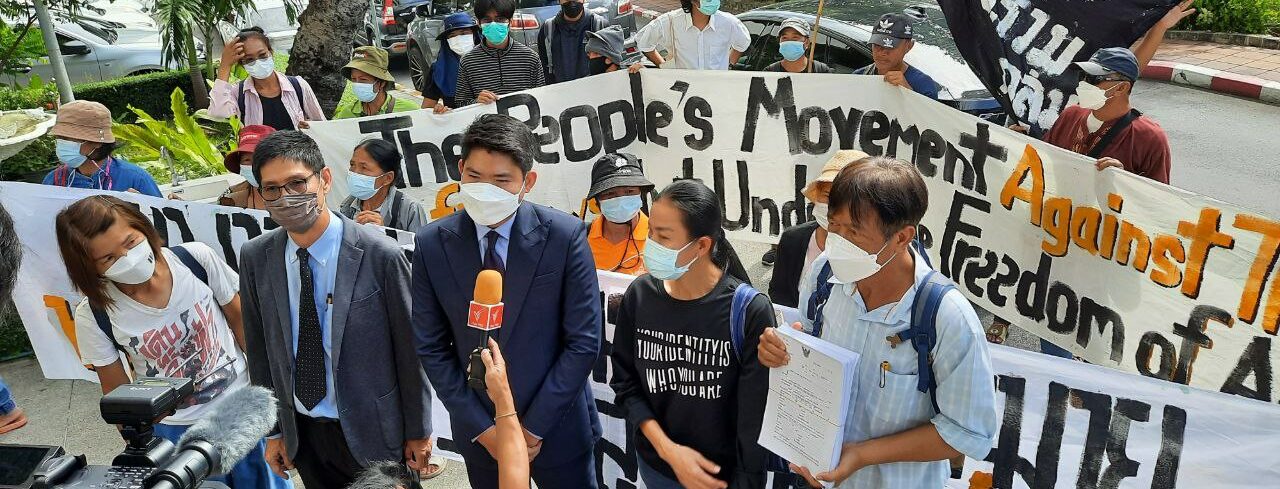
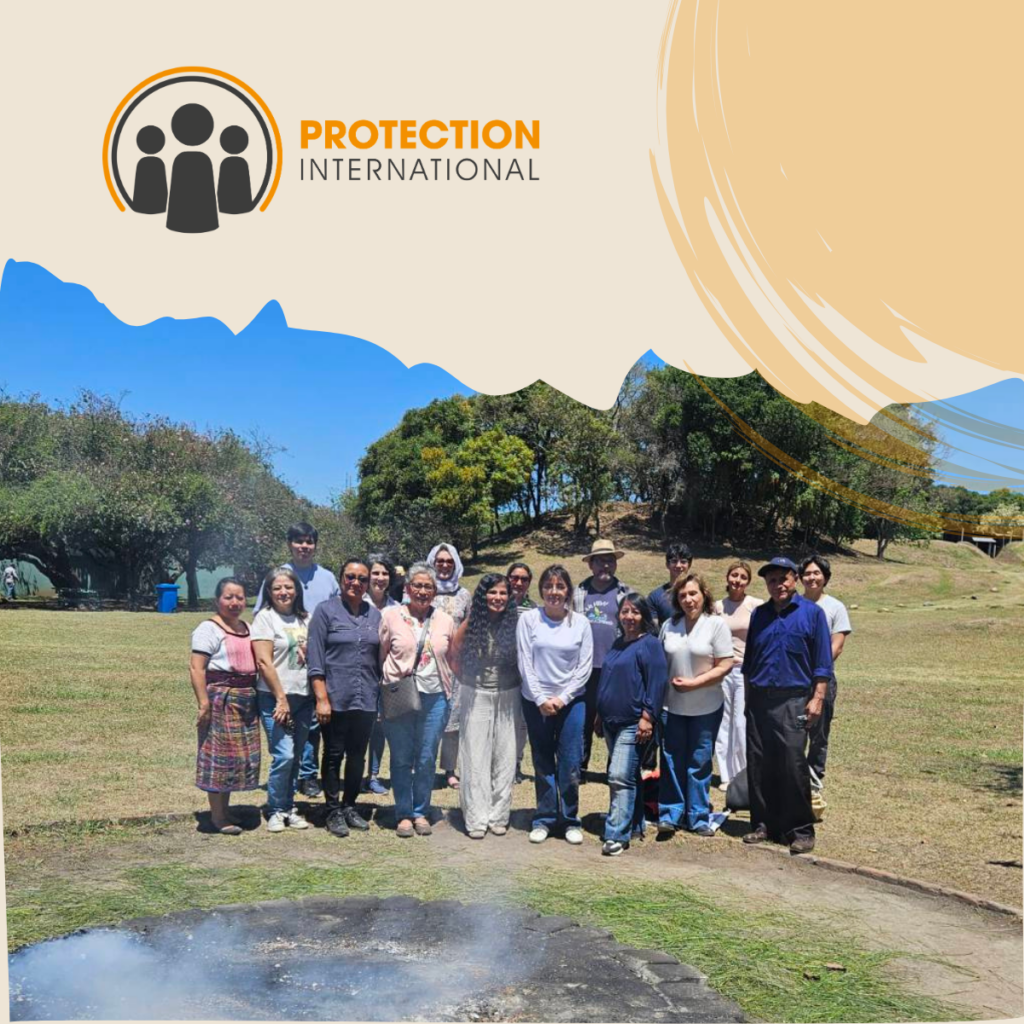
This article comes from Protection International’s Executive Director, Antonia Potter Prentice, after a recent trip to the regional hub Protection International Mesoamerica.
After spending 10 days immersed in the work of my colleagues in Protection International Mesoamerica, I witnessed how the team functions as a regional bridge of solidarity, protection and support, connecting networks of HRDs and journalists across Guatemala, Honduras, and El Salvador. Beginning in Guatemala, my colleagues brought me to meet the indigenous women defenders of the Qanachoch movement who are protecting their land and rivers from destructive palm oil plantations.
Travelling to Cobán in the department of Alta Verapaz, PI Mesoamerica delivered a psychosocial workshop, sharing tools and strategies for these women defenders to protect their individual and collective mental health while defending their livelihoods.
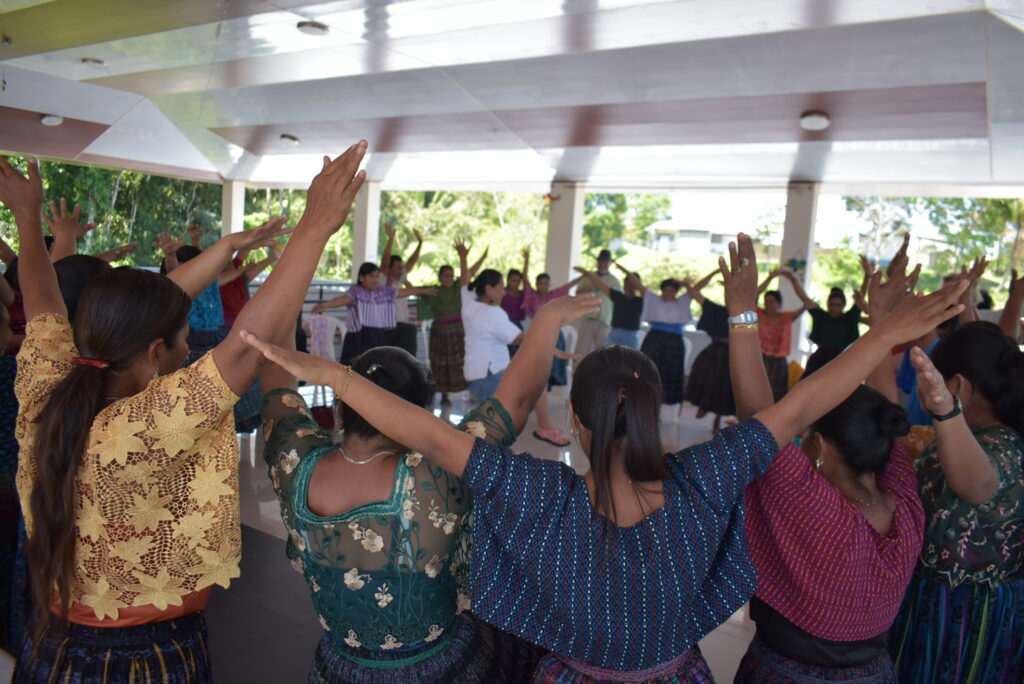
Psychosocial protection workshop with indigenous women defenders of the Qanachoch movement, Guatemala.
Back to the capital, we met with COPADEH, the presidential commission in charge of developing and now implementing Guatemala’s public policy for the protection of HRDs. As advocates for public policies for the protection of HRDs, PI has been involved in this process since its beginnings in 2015. Hearing from government officials how significant PI’s role in this journey was a powerful re-affirmation and recognition of our work on public policies for the protection of HRDs. Despite the challenges for its effective implementation, PI will continue to accompany Guatemala’s public policy journey, ensuring that it brings long-term protection to the country’s HRDs.
An activity that I am still reflecting on was the European Union funded gathering on freedom of expression and journalism in Mesoamerica, co-organised by Protection International Mesoamerica with Peace Brigades International and Reporters Without Borders. Our colleagues in Mesoamerica have a long-standing relationship with journalists and HRDs defending freedom of expression, and are a member of the the Observation Group of Press Freedom in Central America. The same Observation Group published a joint report on Community Journalism in Guatemala in 2025, where the voices of community and indigenous journalists outline the patterns of violence, criminalisation, exclusion, and censorship affecting this essential sector.
Strikingly, Guatemala is now a refuge for many journalists in exile, the majority coming from neighbouring countries with repressive governments. This would not have been the case a few years ago. This context is a clear example of networks saving lives, where civil society and defenders of independent journalism work together to protect journalists across Mesoamerica. These exiled journalists are managing to continue their work reporting on the human rights situation in their home countries, tackling false narratives and disinformation. It reminded me of PI’s work on positive narratives, and how crucial this focus is to protect human rights work in any context.
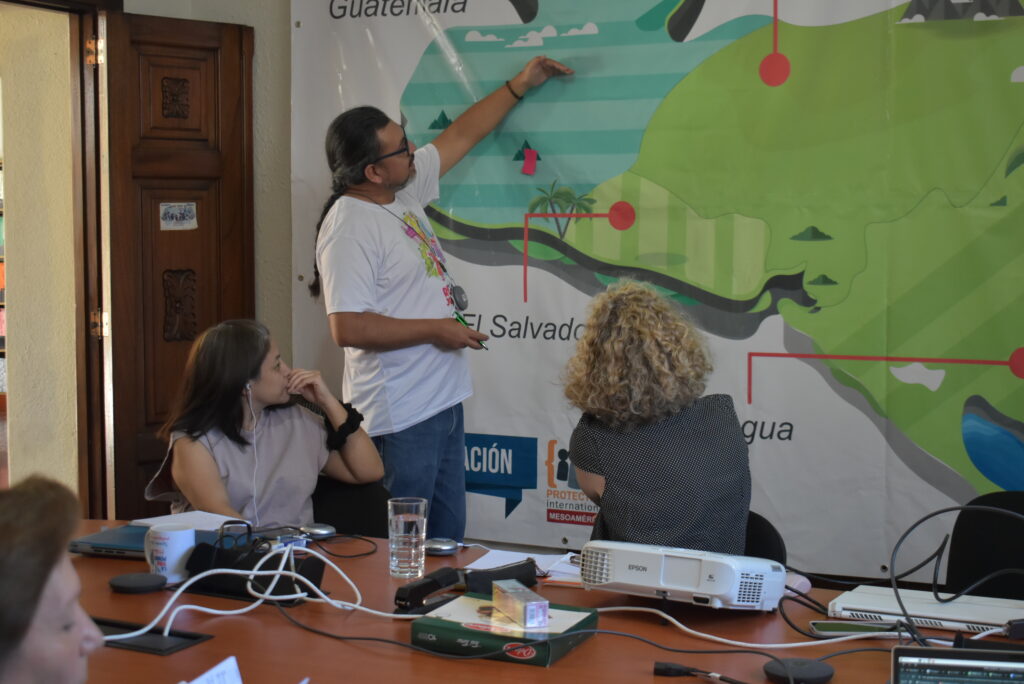
Contextual analysis session at the Protection International Mesoamerica office, Guatemala.
The second leg of the trip was in Honduras. There I joined the National Meeting of Human Rights Defenders, witnessing how PI Mesoamerica is partnering with civil society and HRDs to build a strong Honduran protection network of HRDs defending land, environment, civic space, indigenous and LGBTIQ+ rights. I was inspired and moved to see how such a diverse group of HRDs are working together to foster a safer environment to defend human rights.
My colleagues taught me so much about the Honduran landscape for HRDs, and how PI continues to set the bar high when it comes to the Government’s implementation of its National Protection Mechanism (NPM) for Human Rights Defenders (HRDs). Last year my colleagues Mauricio Angel and Evelina Vargas delivered training to build the capacity of over 20 officials within the NPM, and our team in Honduras continues to monitor the NPM’s effectiveness closely.
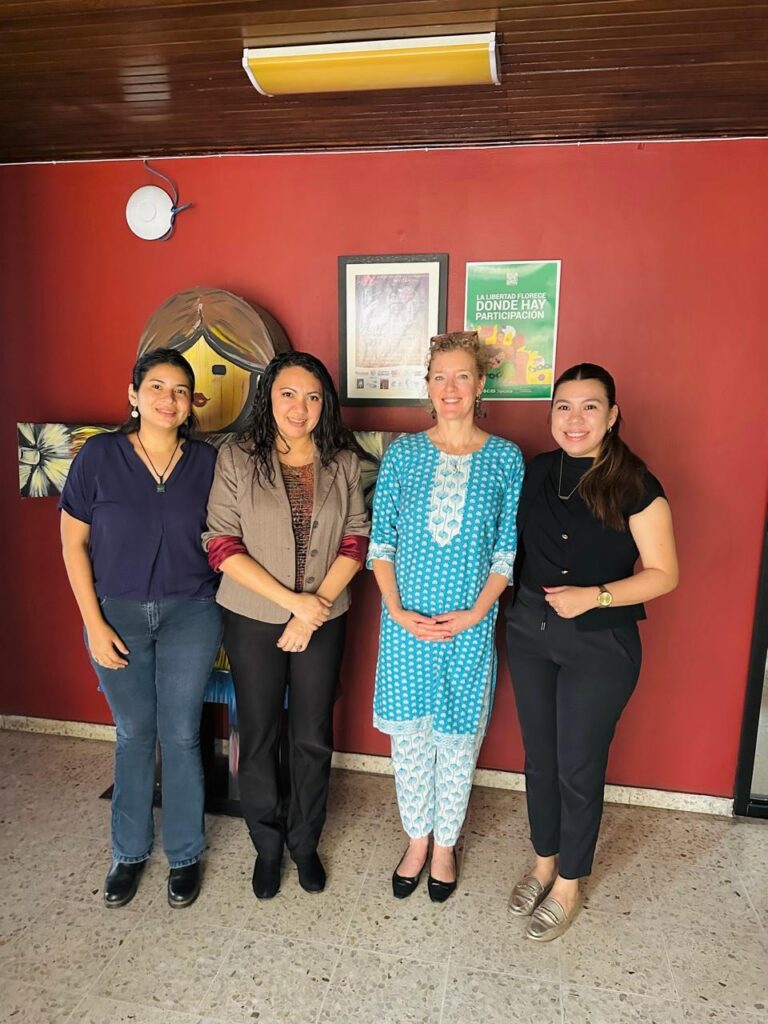
From Left-Right: Evelina Vargas, Protection Officer – Honduras at Protection International Mesoamerica; Karla Valladares, legal representative at Peace Watch Switzerland and coordinator of the Human Rights working group at Espacio Asociación de Cooperación Internacional; Antonia Potter Prentice, Executive Director at Protection International; Scarlett Durón, Secretary at Espacio Asociación de Cooperación Internacional.
What I take away from this trip is how our teams on the ground are part of a wide network, connecting into grassroots organising, forging relationships of trust and making sure that defending rights is done safely and effectively. I was humbled to witness how everyday PI Mesoamerica accompanies such a diverse range of HRDs, and elevates their voices to the spheres of policy and decision making.
It was a true privilege and inspiration to see what we do and why we do it. PI’s talent is local and is on the ground, yet we are part of an ecosystem which can connect HRDs with duty bearers at the UN, the EU and regional mechanisms.
My trip confirmed to me that communities of HRDs are the change makers for a better future, but the obstacles against HRDs and civil society are still significant. In an international climate of scarcity for what is right, good and sustainable, PI is still holding onto its huge amount of expertise, knowledge and relationships with HRDs.